
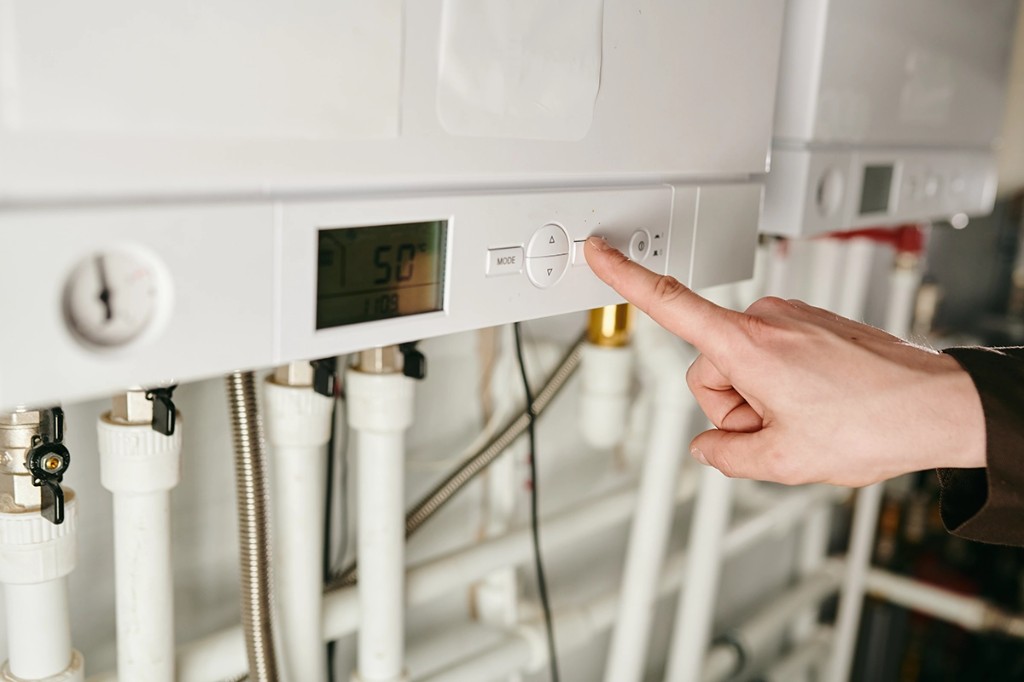
Houses in multiple occupation place particular demands on plumbing, hot water, heating, boilers, bathrooms, kitchens and gas appliances. Several occupants may share facilities, so faults affect more people at once and maintenance call-outs can be more frequent than in a single-household let.
Etchells Plumbing Services provides residential plumbing, heating and gas work for HMO landlords and property managers across South Birmingham, Bromsgrove, Hagley, Kidderminster and the corridor towards Bewdley. Gas Safe registered 227442. This is domestic HMO and shared-house work — not commercial kitchens, factories or communal plant rooms.
What counts as an HMO?
Legal / regulatory
GOV.UK explains that a house in multiple occupation (HMO) is generally a property rented out by at least three people who are not from one household (for example a family) but share facilities such as a bathroom and kitchen — often called a house share. The full legal tests sit in the Housing Act 2004 (including standard, self-contained flat and converted building tests). Those tests are more detailed than a one-line summary, so treat the GOV.UK overview as a starting point and check your specific property with the local authority if status is unclear.
HMO status and HMO licensing are not the same thing. A property can be an HMO under the Housing Act without falling into the national mandatory licensing category. Smaller HMOs may still need a licence where the council runs an additional licensing scheme.
Mandatory licensing in England
According to current GOV.UK guidance on HMO licences, you must have a licence if you are renting out a large HMO in England or Wales. A large HMO is generally where all of the following apply:
- it is rented to 5 or more people who form more than 1 household
- some or all tenants share toilet, bathroom or kitchen facilities
- at least 1 tenant pays rent (or their employer pays it for them)
GOV.UK also states that even if the property is smaller and rented to fewer people, you may still need a licence depending on the area — check with your council. Official guidance: House in multiple occupation licence (GOV.UK).
Etchells does not advise on whether a property needs an HMO licence. We provide plumbing, heating and gas services once you know how the property is managed.
Gas Safety Requirements for HMO Landlords
Legal / regulatory
Landlords have duties under the Gas Safety (Installation and Use) Regulations 1998 concerning gas fittings and flues they provide for tenants. HSE summarises those duties for landlords: relevant appliances and flues must be maintained in a safe condition; safety checks must be carried out at intervals of not more than 12 months by a Gas Safe registered engineer; and written records must be made and retained.
- Safe installation and maintenance — gas fittings and flues must be kept in a safe condition.
- Annual gas safety checks — each relevant appliance and flue checked within 12 months of installation and at intervals of not more than 12 months thereafter.
- Gas Safe registered engineers — checks and related gas work under these duties must be carried out by a Gas Safe registered engineer.
- Appliances and flues — landlord-provided appliances and their flues are in scope; HSE also explains responsibilities where tenants own appliances or flues serve shared equipment.
- Gas safety records — the Landlord Gas Safety Record (often called a CP12) must include the details prescribed in the regulations.
- Tenants — existing tenants must receive a copy within 28 days of the check; new tenants before they move in (HSE also explains limited display options in some shared situations).
- Retention — keep records until two further checks have been carried out (or for two years after the last check if an appliance is removed), as set out in HSE guidance / regulation 36.
- Unsafe appliances — if defects are found, take remedial action; do not use or allow use of an appliance known to be unsafe.
Authoritative sources: HSE landlords’ gas safety and INDG285 (landlords’ duties).
Annual gas safety check vs boiler service
Legal / regulatory Maintenance / good practice
These are related but different. The annual gas safety check produces the Landlord Gas Safety Record and satisfies the statutory check requirement for relevant appliances and flues. A boiler service follows manufacturer maintenance guidance and is aimed at ongoing reliability and condition. HSE is explicit that you should not assume an annual service inspection meets the safety check requirement, or that a safety check alone is sufficient maintenance. Obtaining a CP12 does not automatically mean the boiler has received a full manufacturer-style service.
See our dedicated pages: Landlord gas safety certificates (CP12) , Airbnb & holiday let gas safety and boiler servicing. A landlord gas safety certificate (CP12) starts from £70 for up to 2 appliances. Additional appliances are quoted when you book.
HMO Licensing and Your Gas Safety Certificate
Legal / regulatory
GOV.UK currently states that HMO licence holders must send the council an updated gas safety certificate every year (alongside other licence conditions such as smoke alarms and electrical appliance safety information on request). Councils may add further conditions to a licence — for example about facilities or management standards.
Check the conditions attached to your particular HMO licence and how your local authority wants certificates submitted. Recurring annual gas-safety work is something Etchells can help schedule for HMO stock in our coverage area.
Arrange an HMO Gas Safety Check →
Gas Safety Records for Tenants
Legal / regulatory
HSE requires landlords to issue the latest gas safety check record to existing tenants within 28 days of completion, and to new tenants before they move in. Electronic copies are acceptable if the tenant can access them, but a paper copy must be provided if requested.
In an HMO, several occupants may need access to that information depending on how the property is let and occupied. Do not assume a single tenancy structure — follow HSE rules for each tenancy arrangement and any display rules that apply where appliances sit in common areas. Keep a clear filing system so managers can produce records quickly for tenants, agents or the council.
Carbon Monoxide Alarms in HMOs
Legal / regulatory
From 1 October 2022, GOV.UK guidance on the Smoke and Carbon Monoxide Alarm (Amendment) Regulations 2022 explains that relevant landlords in England must ensure a carbon monoxide alarm is equipped in any room used as living accommodation which contains a fixed combustion appliance, excluding gas cookers.
It is not accurate to say “every room with gas needs a CO detector.” Gas cookers are specifically excluded from that alarm duty in the guidance summarised by GOV.UK. Living accommodation has a defined meaning in the regulations (including, for example, bathrooms and lavatories for these purposes).
GOV.UK also explains that the regulations apply to unlicensed HMOs, while licensed HMOs are exempt from Parts 1–5 of those regulations because similar requirements are imposed through HMO licensing obligations in the Housing Act 2004. For licences granted or renewed on or after 1 October 2022, mandatory licence conditions require a CO alarm in living-accommodation rooms with a fixed combustion appliance other than a gas cooker.
Landlords should check current national requirements, their HMO licence conditions and local authority expectations. Official guidance: Smoke and carbon monoxide alarms — GOV.UK landlord Q&A.
For alarm supply or installation, ask your local authority or a suitably competent installer.
Does an HMO Boiler Have to Be Serviced Every Year?
Legal / regulatory Maintenance / good practice
Statutory position: landlords must keep relevant gas appliances, pipework and flues in a safe condition and complete the annual gas safety check. That is not the same wording as “a separate annual manufacturer boiler service is universally required by UK statute.”
HSE maintenance advice: gas appliances should be serviced in accordance with the manufacturer’s instructions. If instructions are not available, HSE recommends annual servicing unless a Gas Safe registered engineer advises otherwise.
Maintenance / good practice Regular servicing remains sensible preventative maintenance for HMO boilers that serve several occupants: it can catch developing faults, support reliability through winter, and reduce emergency call-outs when multiple tenants depend on one system. Book servicing alongside the gas safety visit when that suits your portfolio calendar.
Boiler servicing · Arrange HMO Boiler Servicing →
Boiler Breakdowns in an HMO
Maintenance / good practice
Loss of heating or hot water is disruptive in any rental. In an HMO it can affect several occupants at once when they share one boiler or hot-water system. Common reported problems include no heating, no hot water, boiler lockout, pressure loss, leaks, ignition faults, thermostat or control faults, and radiator issues.
Do not attempt DIY work on gas appliances. If you smell gas, leave the property and call the National Gas Emergency Service on 0800 111 999. For boiler faults, arrange a Gas Safe registered engineer.
Boiler repairs · Report an HMO Boiler Problem →
Unsafe Gas Appliances
Legal / regulatory
If a Gas Safe engineer identifies an appliance as unsafe, it must not be used. HSE guidance is clear: do not reconnect an appliance that has been isolated or disconnected for safety reasons until the fault has been rectified by a Gas Safe registered engineer. It is an offence to use, or allow the use of, a gas appliance known to be unsafe.
Where a heating appliance has been disconnected because it is unsafe, HSE states that the landlord must provide the tenant with emergency heating while arranging appropriate remedial work by a Gas Safe registered engineer. That duty sits with the landlord; plan temporary heating promptly in an HMO so occupants are not left without heat while repairs are organised.
Source: HSE landlords’ gas safety FAQs and HSE — dealing with tenants.
Gas, Heating & Plumbing Checks Between HMO Tenancies
Legal / regulatory Maintenance / good practice
Legal / regulatory Before a new lease starts, HSE requires that relevant gas safety checks have been carried out within the 12 months before the lease date (unless appliances were installed more recently and fall under the installation timing rules). New tenants must receive the latest gas safety record before they move in. Left-behind gas appliances should be removed or checked by a Gas Safe engineer before reletting.
Maintenance / good practice Void periods and changeovers are also a practical opportunity to inspect and resolve common faults before the next group of occupants arrives — these are preventative maintenance points, not a claim that each item is a statutory HMO requirement:
- dripping taps, leaking toilets and cistern problems
- shower faults, bathroom leaks and damaged sanitary fittings
- kitchen plumbing, wastes and appliance connections
- radiators, heating controls and boiler faults
- isolation valves and stop-tap access
This between-tenancy work sits alongside our wider property services approach and the dedicated between-tenancy checklist.
Plumbing Services for HMO Landlords
Maintenance / good practice
Shared bathrooms and kitchens in HMOs see heavy daily use. That does not invent failure rates — it does mean toilets, showers, taps and kitchen sinks appear regularly on maintenance lists alongside heating and gas work.
Etchells covers residential plumbing including:
- toilet repairs and cisterns
- leaking taps and leaking pipes
- bathroom plumbing — showers, basins, baths
- kitchen plumbing — sinks, wastes, appliance plumbing
- water supplies, isolation valves and stop taps
- general plumbing repairs elsewhere in the house
General plumbing · Kitchen plumbing · Bathroom plumbing
HMO Bathroom Plumbing
Maintenance / good practice
Bathroom call-outs typically involve toilets, showers, basins, taps, baths, leaks and associated pipework. Where an HMO has more than one bathroom, keeping facilities usable reduces pressure on the remaining rooms when one is out of action.
Legal / regulatory Do not rely on informal “bathroom-to-occupant” ratios from websites. Amenity standards and maximum occupancy can be set through HMO licensing and local authority standards, which may differ between councils. Check your licence conditions and the amenity guidance published by your local housing authority.
HMO Kitchen Plumbing
Maintenance / good practice
Shared kitchens generate work on sinks, taps, wastes, water supplies, dishwasher and washing machine connections, appliance plumbing, leaks and isolation valves. Plumbing maintenance keeps the kitchen usable; it is separate from licensing judgements about whether kitchen facilities are adequate for the number of occupants — that is for the council / licence conditions.
Heating and Hot Water in HMO Properties
Legal / regulatory Maintenance / good practice
For many short residential tenancies in England, section 11 of the Landlord and Tenant Act 1985 implies a covenant to keep in repair and proper working order the installations for space heating and heating water, and for the supply of water, gas and sanitation. Separately, the Homes (Fitness for Human Habitation) Act 2018 requires rented homes to be fit for habitation and free from serious hazards (GOV.UK guidance refers to hazards including excess cold and problems with hot and cold water). Exact duties depend on the tenancy and property — confirm against official guidance rather than treating this page as a complete statement of housing law.
In practice, HMO heating and hot-water faults often involve boilers, radiators, thermostats, heating controls, system pressure, poor circulation, cold radiators and cylinder or control issues. Diagnosis matters: “no hot water” at a shared bathroom is not always the boiler.
Central heating · Boiler repairs
Multiple Bathrooms and Hot Water Demand
Maintenance / good practice
Properties with several occupants can create substantial simultaneous hot-water demand — especially where more than one shower or bathroom may be used at peak times. When replacing a boiler or redesigning heating and hot water, a survey should consider:
- number of occupants and bathrooms
- simultaneous hot-water use
- incoming water pressure and flow
- property size and heating load
- existing pipework and whether stored hot water is present or appropriate
A combi boiler is not automatically the best solution for every HMO. For larger properties or multiple bathrooms, an appropriately designed system — and in some cases stored hot water — may be more suitable. Do not commit to a system type without a survey of the property.
When Should an HMO Landlord Consider Replacing a Boiler?
Maintenance / good practice
Replacement decisions should be based on the property, not an arbitrary age cut-off. Factors that commonly matter include reliability and frequency of breakdowns, parts availability, cumulative repair costs, heating and hot-water demand, property configuration and the likely cost of continued maintenance versus replacement.
Boiler installation & replacement · Request an HMO Boiler Replacement Quote →
HMO Requirements Can Vary by Local Authority
Legal / regulatory
Councils can operate additional HMO licensing schemes for properties outside the national mandatory category, and they can attach licence conditions that go beyond the national minimum. Always use the official local authority pages for the address of the HMO — schemes change.
Within Etchells’ genuine coverage corridor, landlords commonly deal with more than one council. Examples checked against official council pages (14 September 2026):
- Birmingham City Council — operates mandatory HMO licensing and, from 5 June 2023, an additional licensing scheme for smaller HMOs (typically 3 or 4 people from two or more households sharing facilities). See Birmingham privately rented property licensing and additional HMO licensing. Confirm current definitions and fees on those pages.
- Bromsgrove District Council — publishes HMO licensing guidance focused on mandatory licensing for properties occupied by at least five persons in two or more households sharing amenities. See Bromsgrove HMO landlords page. As of the check date above, do not assume an additional licensing scheme is in force — confirm directly with the council.
- Wyre Forest District Council (covering Kidderminster and nearby towns) — publishes mandatory HMO licensing information for properties meeting the national five-person / two-household / shared-facilities criteria. See Wyre Forest HMO pages. Confirm whether any additional schemes apply to your address.
Etchells works on the plumbing, heating and gas at the property. Licensing applications and amenity assessments remain between you and the council.
HMO Maintenance Checklist
Use this as a practical monitor — not a substitute for reading the regulations or your licence. Labels mark whether the item is driven primarily by legal/regulatory duties or by maintenance / good practice.
| Area | What to monitor | Requirement / good practice | How Etchells can help |
|---|---|---|---|
| Gas safety | Annual checks; records; unsafe appliances | Legal / regulatory | Landlord gas safety (CP12) |
| Boiler | Reliability, faults, manufacturer servicing | Legal / regulatory (safe condition / annual check) · Maintenance / good practice (service schedule) | Servicing, repairs |
| Flues | Safety, termination, tenant-owned appliance interfaces | Legal / regulatory | Included in gas safety / gas work visits |
| CO alarms | Rooms with fixed combustion appliances (excl. gas cookers); licence conditions | Legal / regulatory | Not advertised as a standalone Etchells service — check council / competent installer |
| Heating | Boiler, radiators, controls, pressure | Legal / regulatory (repairing / fitness duties where applicable) · Maintenance / good practice | Heating / boiler repairs |
| Hot water | No hot water, shared bathroom demand, cylinder/controls | Legal / regulatory (where repair duties apply) · Maintenance / good practice | Diagnosis and repair visits |
| Radiators | Cold radiators, leaks, valves | Maintenance / good practice | Heating repairs |
| Kitchen plumbing | Sinks, taps, wastes, appliance connections | Maintenance / good practice | Kitchen plumbing |
| Bathroom plumbing | Toilets, showers, basins, baths, leaks | Maintenance / good practice | Bathroom plumbing |
| Leaks | Pipework, fittings, isolation | Maintenance / good practice | Plumbing repairs |
| Between-tenancy checks | In-date gas record; plumbing/heating void snagging | Legal / regulatory (gas record timing) · Maintenance / good practice (void plumbing list) | Property services void support |
Who this page is for
HMO landlords, managing agents and property managers who need a residential Gas Safe registered contractor for plumbing, heating and gas across South Birmingham, Bromsgrove, Hagley, Kidderminster and the corridor towards Bewdley. Related audience pages: landlords, property managers, letting agents and portfolio landlords.
Contact: 07775 775908 · info@etchellsplumbing.co.uk · Verify Gas Safe 227442.
HMO areas we regularly cover
Residential HMO plumbing, heating and gas along our South Birmingham to Worcestershire corridor — confirm the property postcode when you enquire.
Related property & gas services
Property professionals
HMO services FAQs
What gas safety checks does an HMO landlord need?
Under the Gas Safety (Installation and Use) Regulations 1998, landlords must ensure gas appliances and flues they provide are maintained in a safe condition and checked for safety at intervals of not more than 12 months by a Gas Safe registered engineer. HSE guidance sets out which appliances and records are covered. Etchells carries out landlord gas safety checks and issues the Landlord Gas Safety Record; we do not give formal legal advice.
How often does an HMO need a gas safety certificate?
HSE guidance requires a gas safety check every year on each relevant gas appliance and flue. Before a new tenancy starts, checks must have been done within the 12 months before the lease begins (with limited exceptions for recently installed appliances). Licensed HMO holders also have separate duties to produce an updated gas safety certificate to their council each year under mandatory licence conditions described on GOV.UK.
Do I need to send my HMO gas certificate to the council?
GOV.UK states that HMO licence holders must send the council an updated gas safety certificate every year (where gas is supplied). Councils can add further licence conditions. Check the conditions on your particular licence and how your local authority expects certificates to be submitted.
Does an HMO boiler have to be serviced annually?
The annual landlord gas safety check is a statutory requirement for relevant appliances and flues. A separate manufacturer-style boiler service is not the same thing. HSE advises that gas appliances should be serviced in accordance with the manufacturer’s instructions, and recommends annual servicing where instructions are not available unless a Gas Safe engineer advises otherwise. Do not assume a CP12 alone equals a full service.
Do HMOs need carbon monoxide alarms?
In England, relevant private rented homes must have a carbon monoxide alarm in any room used as living accommodation that contains a fixed combustion appliance, excluding gas cookers (Smoke and Carbon Monoxide Alarm regulations, as summarised in GOV.UK guidance). Licensed HMOs are treated through HMO licensing obligations that impose similar requirements rather than Parts 1–5 of those regulations. Check national rules, your licence conditions and local authority requirements — it is not accurate to say every room with any gas appliance needs a detector.
Does an HMO need a Gas Safe engineer?
Yes for landlord gas safety checks and for gas work on relevant fittings. HSE requires that landlord gas safety checks and related gas work under those duties are carried out by a Gas Safe registered engineer. Etchells is Gas Safe registered under number 227442.
What happens if an HMO boiler is declared unsafe?
HSE states that if a heating appliance has been disconnected because it is unsafe, the landlord must provide emergency heating while arranging appropriate remedial work by a Gas Safe registered engineer. Do not reconnect or use an appliance that has been isolated for safety reasons. The safety check record should record defects and remedial action.
What should I check between HMO tenancies?
Before reletting, HSE expects relevant gas safety checks to be in date for the start of the new lease and for records to be available for new tenants. Void periods are also a practical time to inspect plumbing and heating faults — dripping taps, toilets, showers, kitchen plumbing, radiators and controls — as preventative maintenance rather than as a substitute for statutory gas duties.
Can Etchells handle plumbing as well as gas work for HMOs?
Yes. Shared bathrooms and kitchens generate toilet, tap, shower and sink call-outs alongside boiler, hot water and gas safety work. This remains residential work within our domestic registration — not communal plant rooms or industrial systems.
Can Etchells maintain multiple HMO properties?
Yes, where addresses sit in our coverage corridor. Property managers and portfolio landlords often send a list of HMO addresses for planned gas safety, servicing and reactive plumbing or heating repairs. Confirm each postcode when you enquire.
Do HMO licensing requirements vary between councils?
Yes. Mandatory licensing applies nationally in England to prescribed larger HMOs, but councils may operate additional HMO licensing for smaller properties and can attach further licence conditions. Always check the official website for the local housing authority covering the property.
Discuss your residential portfolio
Tell us roughly how many properties you look after and what you need help with. We will come back to discuss coverage, access and how ongoing work can be arranged.